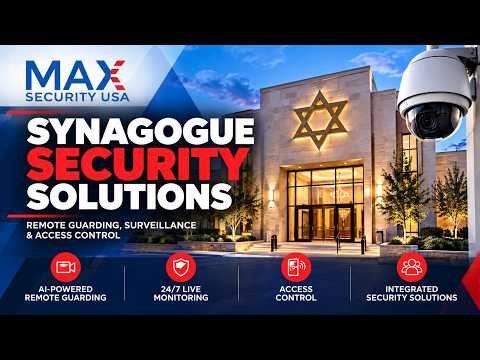

When AI detects suspicious activity, the system flags the event and alerts a trained operator. The operator reviews the live video, verifies whether the activity is a real threat, and can intervene through two-way audio or coordinate with law enforcement in real time, turning cameras from passive recorders into active protection.
Watch how Max Security USA combines AI-assisted detection, live monitoring, and real-time intervention.
It's 2:00 AM. Someone enters your property when no one is supposed to be there. Your security camera captures the activity. But what happens next?
Traditional security cameras may record the incident for review the following morning. AI-powered remote guarding takes a more proactive approach, combining intelligent detection technology with trained security professionals who can evaluate suspicious activity and intervene in real time.
At Max Security USA, remote guarding brings together existing camera infrastructure, AI-assisted detection, live monitoring, two-way audio communication, and coordinated emergency response.
The objective isn't simply to capture evidence after an incident. It's to identify potential threats and take appropriate action while they're happening.
How Does AI Remote Guarding Work?
AI remote guarding uses intelligent video analytics to identify potential security threats and alert trained monitoring professionals who can assess the situation and initiate a response.
Unlike traditional surveillance systems that primarily record video, remote guarding adds active monitoring and intervention capabilities.
Here's how the process works:
- Video analysis: Camera streams are processed through intelligent detection software to identify activity that may require attention.
- Automated alerts: When potentially suspicious activity is detected, the system alerts monitoring personnel and identifies the relevant camera footage.
- Human verification: A trained operator reviews the activity to determine whether intervention is appropriate.
- Live intervention: Depending on the circumstances, operators can use two-way audio to communicate with individuals on the property.
- Emergency coordination: When necessary, operators can contact law enforcement and provide information to assist responding officers.
This combination of intelligent technology and human judgment helps security teams respond to relevant activity without relying solely on continuous manual observation.
Do You Need AI Security Cameras for Remote Guarding?
No. You do not necessarily need to replace your existing cameras to benefit from AI-assisted remote guarding.
One of the most common misconceptions about remote guarding is that every camera must have built-in artificial intelligence.
In reality, compatible existing surveillance cameras can often be integrated with external intelligent video analytics software.
Max Security USA can work with compatible IP and analog camera systems, using appropriate video integration technology, including ONVIF-supported systems.
Rather than requiring every camera to perform AI analysis independently, video streams can be processed through specialized intrusion detection software.
This means property owners may be able to modernize their security operations without replacing their entire surveillance infrastructure.
Compatibility depends on the existing equipment, network configuration, and system capabilities.
For properties with significant investments in video surveillance, this approach can provide a practical path toward more proactive security.
Why Isn't Traditional Video Surveillance Enough?
Security cameras play an important role in investigations, incident documentation, and evidence collection.
However, recording an incident and actively responding to one are two different things.
Consider a commercial property with 100 cameras.
A security professional responsible for continuously watching multiple screens may struggle to identify every potentially suspicious event.
Human attention has natural limitations, including fatigue, distractions, and the difficulty of monitoring numerous video feeds simultaneously.
AI-assisted detection helps address these challenges.
Instead of expecting operators to watch every camera continuously, intelligent software can identify activity that warrants attention and direct operators to the relevant footage.
AI helps identify where to look. Trained security professionals determine what action to take.
This human-in-the-loop approach is a key component of effective remote guarding.
What Happens When a Remote Guarding Operator Detects an Intruder?
When Max Security USA's monitoring technology identifies potentially suspicious activity, an alert can be reviewed by an operator in the company's 24/7 U.S.-based Command Center.
The operator evaluates the situation, including whether the individual appears authorized to be on the property.
When intervention is warranted, the operator can notify other Command Center personnel, activate the property's audio equipment, and coordinate an appropriate response.
For example, a live audio warning may inform the individual that the property is being monitored and instruct them to leave.
If the individual refuses to comply or the circumstances warrant emergency assistance, operators can contact law enforcement.
This process provides an opportunity to respond while an incident is unfolding, rather than discovering it through recorded footage later.
Real Security Intervention: How Two-Way Audio Helped Police Locate an Intruder
A recent incident monitored by Max Security USA demonstrates why live communication is such an important part of remote guarding.
During an active monitoring event, Command Center personnel identified an unauthorized individual on a property.
Operators activated the property's speaker system and instructed the individual to leave.
Instead of complying, the person concealed themselves in nearby bushes.
The monitoring team continued issuing verbal instructions, but the individual remained on the property.
Operators contacted 911 and requested law enforcement assistance.
When responding officers arrived, they initially had difficulty locating the individual.
However, Max Security USA's monitoring personnel could still see where the person was hiding.
As an officer approached the area, the Command Center activated the speaker system and established direct communication.
The operator directed the officer toward the individual's location.
With that information, the officer located the individual, who was subsequently detained and removed from the property.
The critical difference was not simply that the cameras captured the incident. It was that trained monitoring professionals could communicate in real time and assist responding officers.
Without that communication capability, locating the individual might have required additional searching or further coordination through dispatch.
This incident illustrates how intelligent detection, live monitoring, and two-way audio can work together to support a more informed security response.
Why Is Two-Way Audio Important in Remote Guarding?
Two-way audio enables remote monitoring operators to communicate through compatible speakers and microphones installed at a protected property.
This capability adds an active intervention component to video surveillance.
Depending on the situation, operators may be able to:
- Issue live verbal warnings to unauthorized individuals.
- Inform people that their activity has been detected.
- Provide instructions to individuals on the property.
- Communicate with responding emergency personnel when appropriate.
- Support faster identification and assessment of developing incidents.
Unlike prerecorded messages, live communication allows operators to respond to the circumstances they are observing.
Two-way audio does not guarantee that an individual will comply or that an incident will be prevented. However, it provides an additional response option that traditional recording-only camera systems do not offer.
What Types of Properties Benefit From AI Remote Guarding?
Remote guarding can be particularly valuable for properties with limited overnight staffing, multiple vulnerable access points, or recurring unauthorized activity.
Commercial and industrial properties: Monitor building perimeters, loading areas, parking lots, and other areas where unauthorized access may occur.
HOAs and gated communities: Support security at entrances, gates, shared amenities, and other designated areas without relying exclusively on on-site personnel.
Construction sites: Monitor equipment, materials, access points, and activity outside normal working hours.
Self-storage facilities: Identify suspicious after-hours activity around storage buildings, gates, and perimeter areas.
Automotive dealerships: Monitor vehicle inventory, outdoor lots, and restricted areas during overnight hours.
Marinas and waterfront facilities: Provide additional visibility into docks, storage areas, equipment, and seasonal property vulnerabilities.
The appropriate solution depends on each property's layout, risk exposure, existing camera infrastructure, and operational requirements.
Can Remote Guarding Replace On-Site Security Guards?
Remote guarding can reduce the need for certain routine on-site monitoring duties, but it is not a complete replacement for every security officer function.
Some properties may benefit from remote guarding as their primary after-hours monitoring solution.
Others may require a combination of remote monitoring, access control, patrol services, and on-site security officers.
For example, a facility that requires physical visitor screening, emergency assistance, or continuous in-person access management may still need on-site personnel.
The goal is to align the security strategy with the property's actual risks, rather than assuming that one solution is appropriate for every environment.
Max Security USA provides both security technology and licensed security personnel, allowing property owners to explore integrated protection strategies.
Frequently Asked Questions About AI Remote Guarding
What happens when an AI security camera detects an intruder?
An AI-assisted detection system identifies potentially suspicious activity and sends an alert to a monitoring operator. The operator reviews the footage, determines whether intervention is warranted, and may activate live audio or contact law enforcement based on the circumstances.
Does AI remote guarding work with existing security cameras?
Yes, many existing IP and analog camera systems can be integrated with external video analytics and remote monitoring technology. Compatibility depends on the camera system, video connectivity, and supporting equipment.
Is AI remote guarding monitored by real people?
At Max Security USA, yes. Intelligent detection software supports trained operators working in a 24/7 U.S.-based Command Center. AI helps identify activity that requires attention, while people evaluate the situation and determine the appropriate response.
Can remote security operators speak to trespassers?
Yes. When compatible two-way audio equipment is installed, monitoring operators can issue live verbal warnings and communicate with individuals on the property.
Can remote guarding operators contact the police?
Yes. When circumstances warrant law enforcement involvement, monitoring personnel can contact emergency services and share relevant incident information to assist the response.
Is remote guarding better than traditional security cameras?
Remote guarding provides capabilities beyond traditional recording-only surveillance, including active monitoring, event verification, and potential real-time intervention. However, its effectiveness depends on system design, coverage, monitoring procedures, and site conditions.
Is AI remote guarding available overnight?
Max Security USA operates a 24/7 U.S.-based Command Center. Monitoring schedules and coverage can be configured according to the property's security requirements and service agreement.
From Recording Incidents to Responding in Real Time
Security technology has evolved beyond simply documenting what happened.
By combining intelligent video analytics with live professional monitoring and two-way communication, property owners can take a more proactive approach to protecting their facilities.
The incident described above demonstrates the value of having trained personnel who can assess activity, communicate directly, and coordinate with responding authorities.
Because effective security isn't just about what your cameras see. It's about what happens next.
Are Your Cameras Recording or Actively Protecting Your Property?
If your property already has surveillance cameras, you may be able to enhance your existing system with remote guarding technology.
Max Security USA can help evaluate your current infrastructure and determine whether AI-assisted remote monitoring, live intervention, or an integrated security solution is appropriate for your property.
Learn more about our Remote Guarding solutions or contact Max Security USA to discuss your property's security needs.