Hiring a security company is only the beginning. Once security officers are deployed, how does the provider ensure that instructions are followed, changes are communicated, and the client's expectations are consistently met?
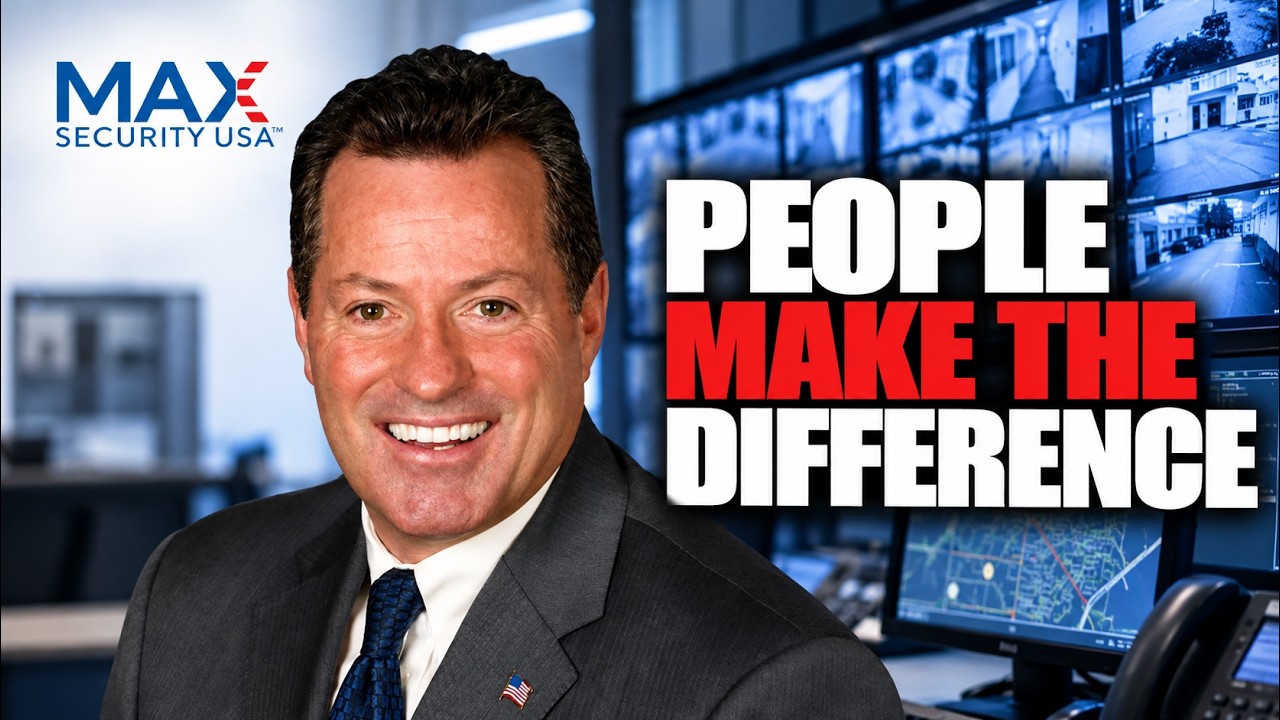
Watch: Peter McGinn explains how Max Security USA supports its security officers and clients.
Featuring Peter McGinn, Chief Administrative Officer, Max Security USA
For commercial property managers, construction companies, homeowners associations, and other organizations, effective security requires more than placing an officer at a location. It requires ongoing communication, active management, field supervision, and a dependable operational support system.
At Max Security USA, these responsibilities are supported by a coordinated team of security professionals, field supervisors, and a 24/7 U.S.-based Command Center.
Peter McGinn, Chief Administrative Officer of Max Security USA, explains why successful security operations depend on what happens behind the scenes.
Security Doesn't End When Officers Are Deployed
When a security provider submits a proposal, develops a security plan, and deploys personnel, the real test of service begins.
The responsibilities outlined during the proposal process must translate into consistent execution at the property.
That requires communication between the client, management, supervisors, and security officers.
As Pete explains, the goal is to make sure that what the client requests is what the client actually receives.
If operational challenges arise during implementation, management must identify and address them.
This approach helps maintain alignment between the agreed security responsibilities and the services being delivered.
Why Do Security Plans Need to Change Over Time?
No property operates exactly the same way every day.
Construction schedules change. Commercial buildings experience different occupancy patterns. Homeowners associations update access procedures. Car dealerships adjust inventory and operating hours. Entertainment venues manage varying event schedules and visitor activity.
A security plan that works today may require adjustments tomorrow.
Effective security management accounts for these changes by ensuring that updated instructions reach the personnel responsible for protecting the property.
Depending on the location, changes may occur daily, weekly, or monthly.
The important factor is not how frequently the plan changes, but how effectively those changes are communicated and implemented.
The Importance of a 24/7 Security Command Center
One of the most important distinctions between security providers is the level of operational support available to officers in the field.
At Max Security USA, security officers are supported by an in-house, U.S.-based Command Center operating 24 hours a day, 365 days a year.
The Command Center serves as a central point of communication and operational coordination.
Its responsibilities include supporting security personnel, communicating updated instructions, coordinating with management and supervisors, and using available technology to help oversee field operations.
Depending on the assignment and deployed systems, operational oversight may include reviewing post orders, vehicle location information, mobile device activity, and other security technology.
This infrastructure helps connect individual security assignments to a broader operational team.
Why Field Supervision Matters in Professional Security
A security officer may be the most visible part of a company's service, but effective security operations depend on much more than that individual.
Behind the officer is a support structure that may include field supervisors, operations management, Command Center personnel, and technology resources.
These teams work together to help ensure that officers receive accurate instructions, understand changes in site requirements, and have access to operational support.
This is particularly important for properties with changing conditions, multiple access points, or complex security responsibilities.
Rather than treating each officer as an isolated assignment, Max Security USA emphasizes a coordinated team approach.
How Security Management Supports Different Industries
Although security requirements vary by property type, communication and operational accountability remain essential across industries.
| Industry | Examples of changing security needs |
|---|---|
| Construction sites | Contractor schedules, deliveries, changing access points, and site activity |
| Homeowners associations | Resident access procedures, visitor management, and community-specific instructions |
| Commercial properties | Tenant activity, building access, and after-hours procedures |
| Automotive dealerships | Vehicle inventory, deliveries, and changing operating schedules |
| Entertainment venues | Event schedules, crowd activity, and staffing requirements |
An effective security provider must understand these differences while maintaining consistent communication and supervision.
What Should Property Managers Look for in a Security Company?
When evaluating a security provider, property managers and business owners should look beyond the hourly rate or number of officers assigned.
Important questions include:
- Who communicates changes in security procedures to officers?
- Is operational support available 24/7?
- How are field supervisors involved?
- How does management verify that post orders are being followed?
- What happens when site conditions or client requirements change?
- How are operational concerns identified and addressed?
These questions help reveal the infrastructure supporting the security service.
A security company's ability to staff a location is important. Its ability to manage that location consistently is equally important.
The Max Security USA Approach: People, Technology, and Accountability
Max Security USA combines licensed security personnel, experienced operations management, field supervision, and an in-house 24/7 Command Center to support clients across multiple industries.
The company's broader capabilities also include remote guarding, video surveillance, access control, automated gate systems, and other integrated security technologies.
This combination allows Max Security USA to help clients evaluate security as an ongoing operational responsibility rather than simply a staffing requirement.
As Pete's interview illustrates, the officer at a property is only one part of the service.
Behind that officer is a team working to ensure that information is communicated, resources are available, and security operations remain aligned with the client's needs.
Frequently Asked Questions About Security Management
What happens after a security company deploys officers?
After deployment, a security company should maintain communication with the client, provide operational supervision, communicate updated post orders, and address issues that arise during service.
What is the role of a security Command Center?
A security Command Center provides centralized operational support and coordination. Depending on the provider's capabilities, it may assist with communications, monitoring, incident coordination, and field personnel oversight.
Why are post orders important in security services?
Post orders establish the responsibilities, procedures, and site-specific instructions that security officers are expected to follow. They help ensure that security services reflect the property's operational requirements.
How often should security procedures be updated?
Security procedures should be reviewed whenever property conditions, access requirements, operating schedules, or security risks change. Some properties require frequent adjustments, while others operate under more consistent procedures.
Does a security officer work independently?
Although an officer may be physically stationed alone, a professionally managed security assignment should have access to supervisory and operational support.
What industries does Max Security USA serve?
Max Security USA provides security services for construction sites, homeowners associations, commercial properties, automotive dealerships, entertainment venues, and other facilities requiring professional security services.
Looking for More Than Just Security Staffing?
The right security partner should provide more than personnel. It should offer the communication, supervision, technology, and operational resources needed to support your property as requirements evolve.
Speak to a Security Specialist at Max Security USA to discuss your property's security needs and explore an appropriate combination of on-site security and technology-based solutions.